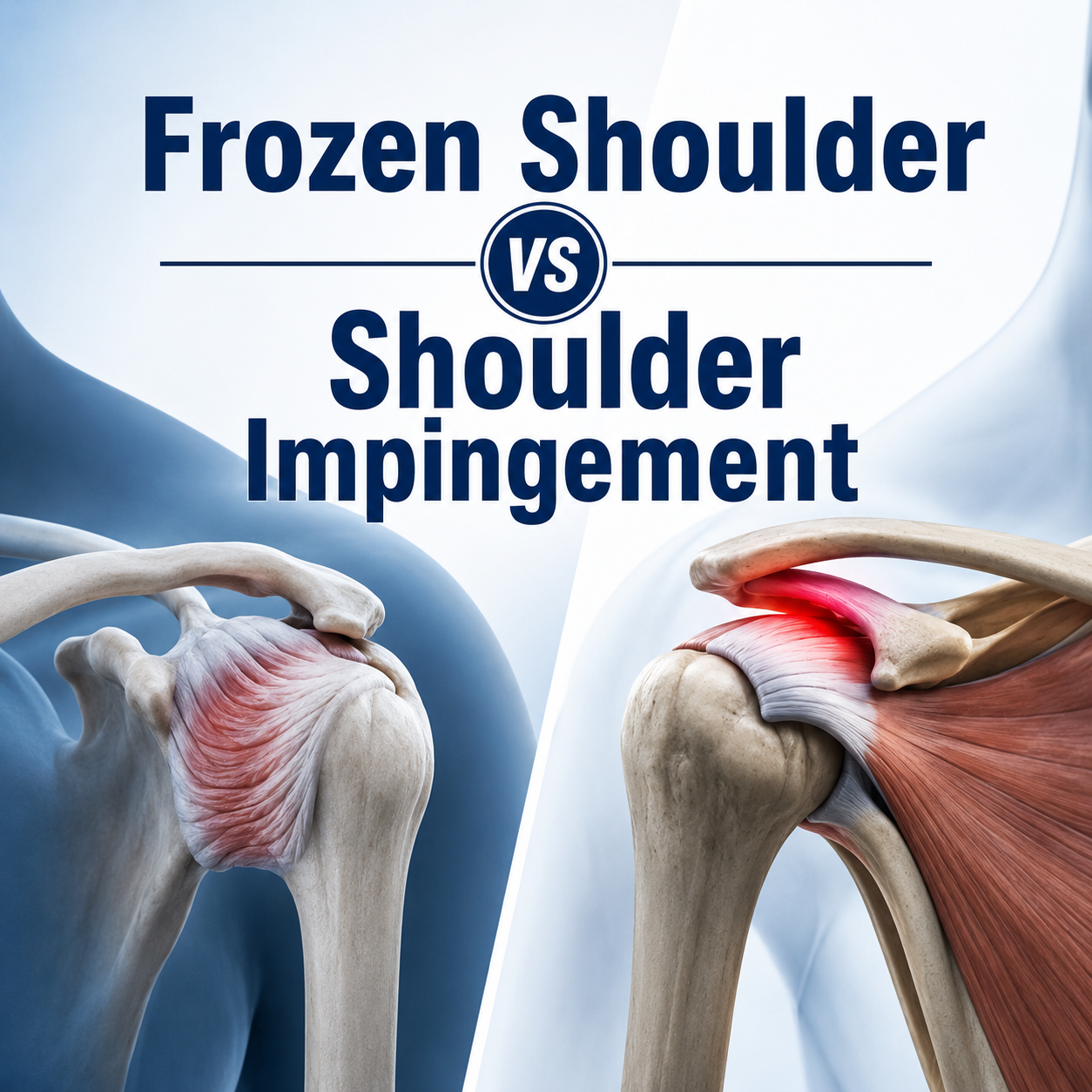

Frozen Shoulder vs Shoulder Impingement
Frozen shoulder and shoulder impingement are two common causes of shoulder pain that are often confused, yet they differ in their underlying causes, symptoms, and treatment approaches. Understanding these differences can help you choose the most effective path to recovery.

Why They're So Often Confused
However, despite their similar symptoms, they are very different conditions with different underlying causes and treatment approaches.
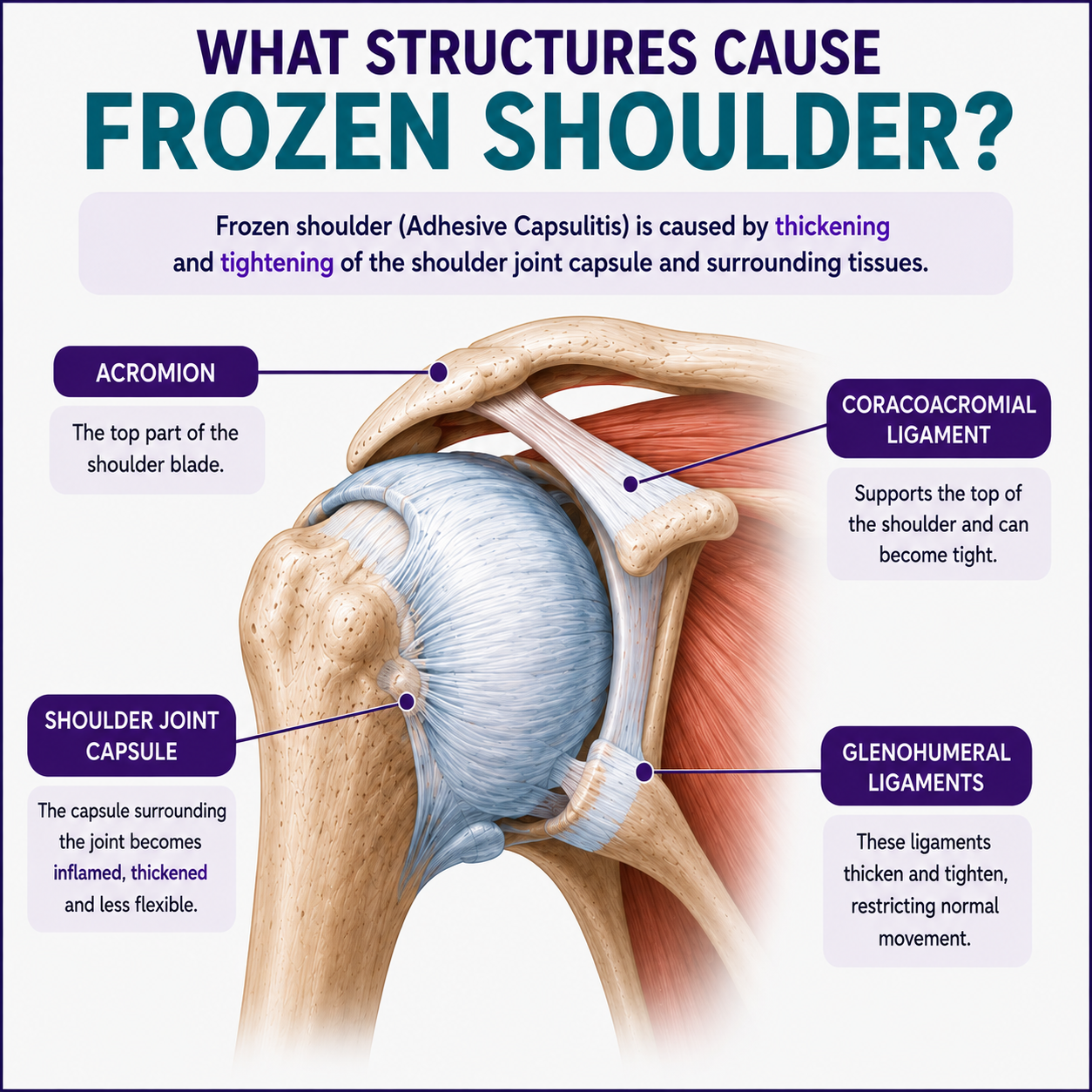
Frozen shoulder is caused by tightening and thickening of the shoulder joint capsule, leading to progressive stiffness and a significant loss of movement in all directions.
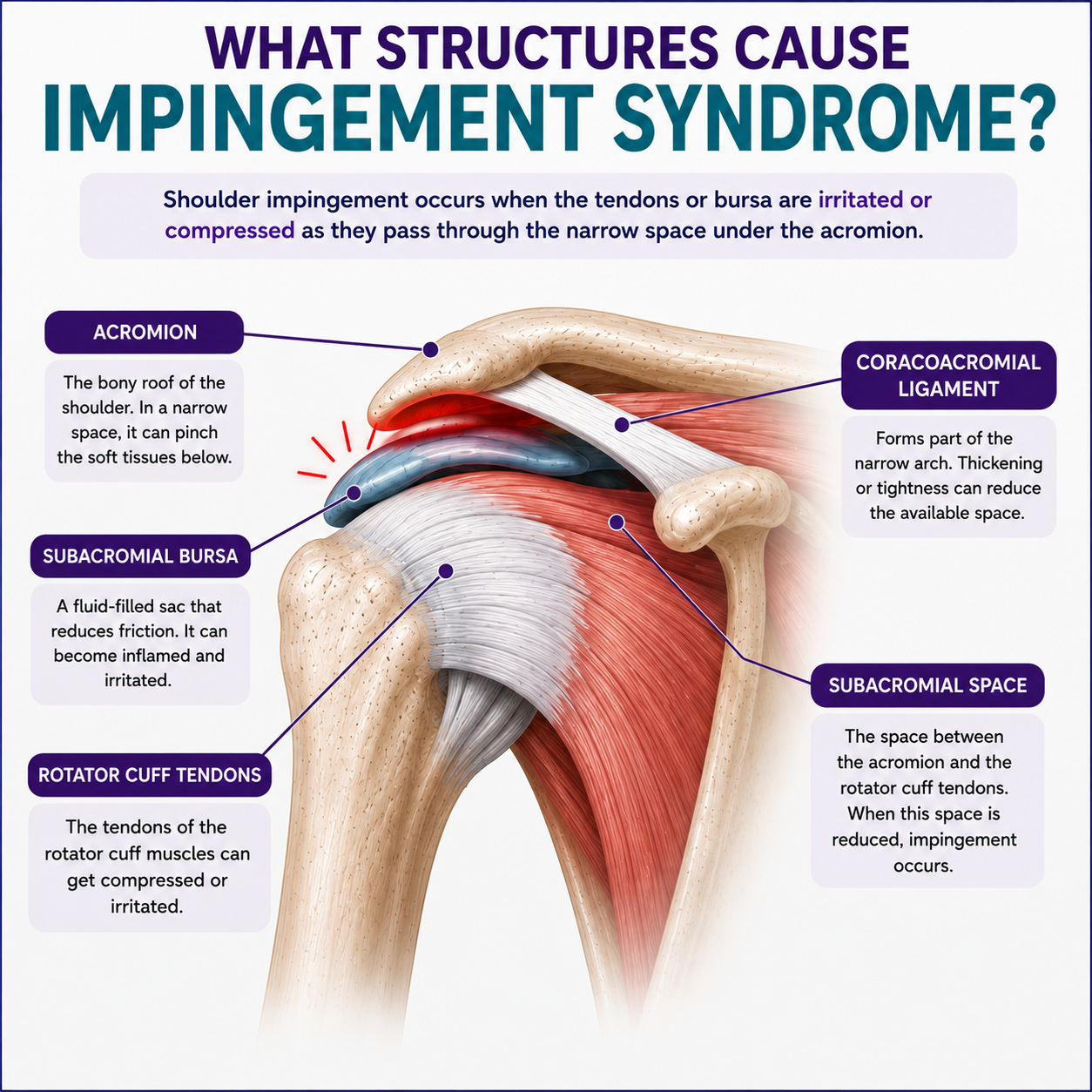
Shoulder impingement, on the other hand, occurs when the tendons or bursa become irritated or compressed beneath the top of the shoulder, typically causing pain during certain movements while the joint itself often remains relatively mobile.
Because the management of these conditions differs, obtaining an accurate diagnosis is essential. A thorough clinical examination can help identify the true cause of your shoulder pain and ensure you receive the most appropriate treatment, rather than relying on symptoms alone or an online search.
What's the Difference?
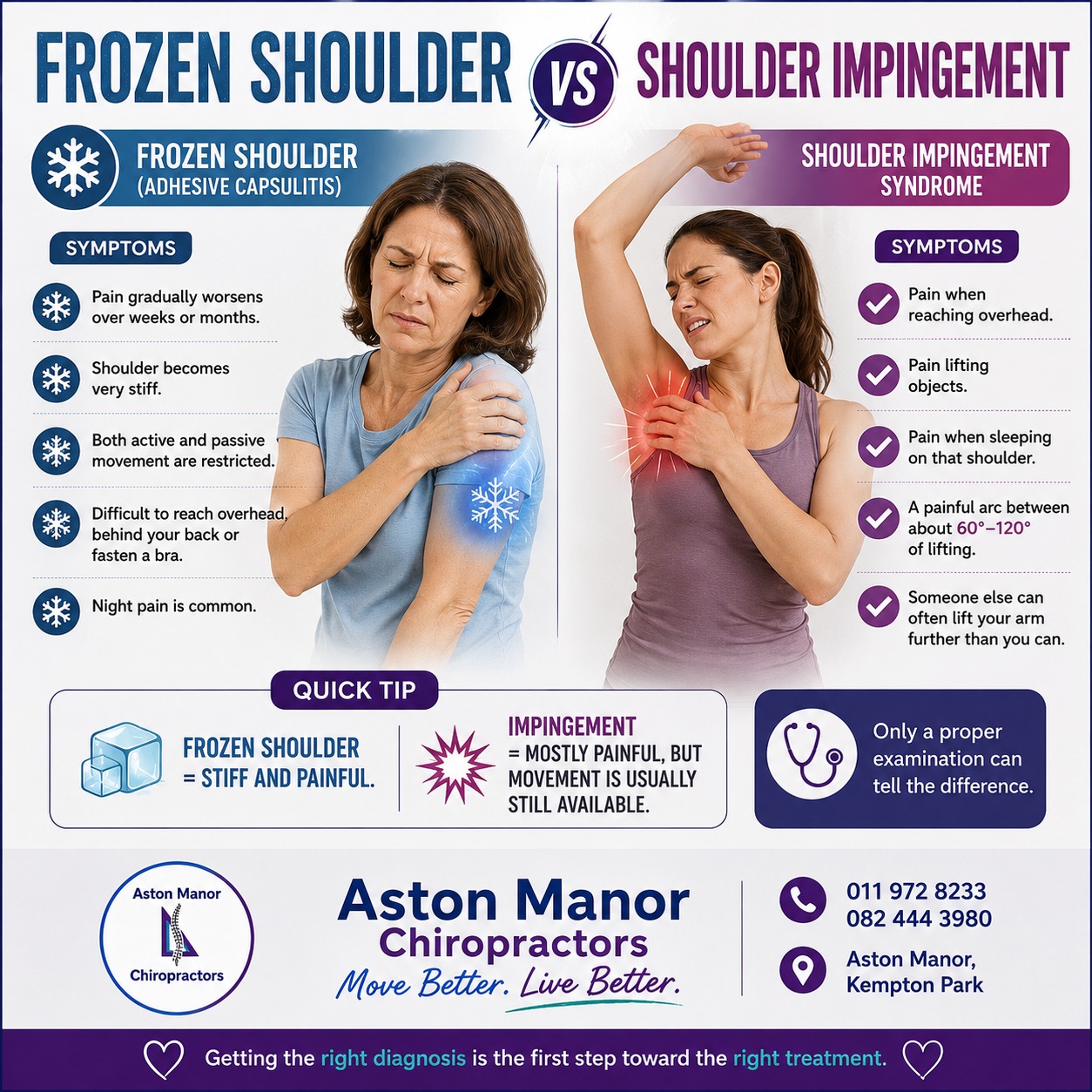
Frozen shoulder (adhesive capsulitis) and shoulder impingement syndrome are among the most common causes of shoulder pain, and because they share several symptoms, they are frequently mistaken for one another.
Both conditions can make lifting your arm, reaching overhead, or performing everyday tasks uncomfortable. However, the underlying problem is very different.
Frozen shoulder is characterized by inflammation, thickening, and tightening of the shoulder joint capsule, leading to progressive stiffness and a significant loss of both active and passive movement.
Shoulder impingement, on the other hand, occurs when the rotator cuff tendons or the bursa become compressed beneath the acromion, causing pain during certain movements while overall shoulder mobility is often largely preserved.
Distinguishing between these conditions is essential because they respond to different treatment approaches.
A thorough clinical examination can accurately identify the source of your shoulder pain, allowing treatment to target the underlying cause rather than simply managing the symptoms.
Causes
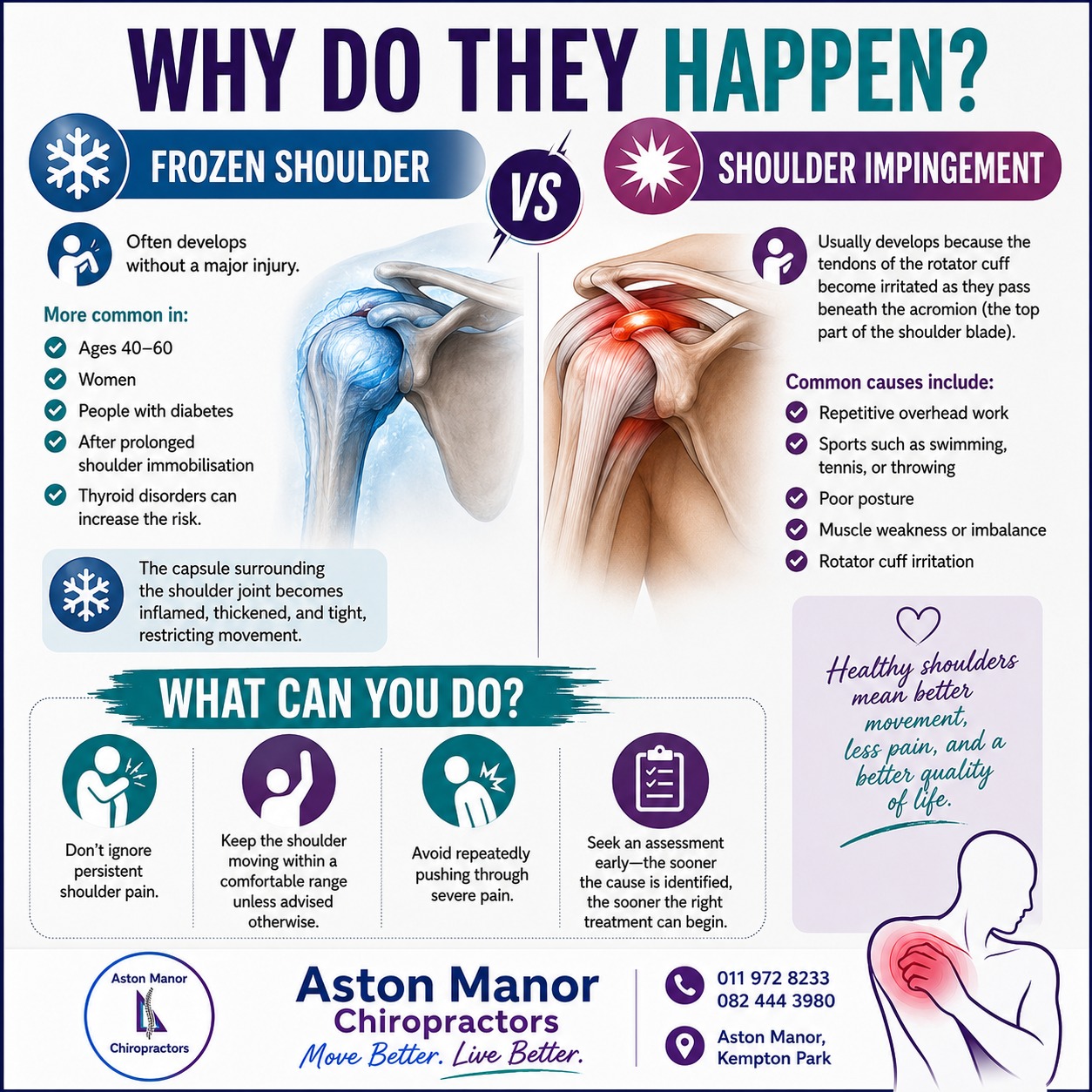
Although frozen shoulder and shoulder impingement can cause similar symptoms, they develop for very different reasons. Frozen shoulder (adhesive capsulitis) occurs when the capsule surrounding the shoulder joint becomes inflamed, thickened, and tight, gradually restricting movement.
It often develops without a significant injury and is more common in people aged 40–60, women, individuals with diabetes, thyroid disorders, or after a period of shoulder immobilisation.
Shoulder impingement, by contrast, develops when the rotator cuff tendons or the subacromial bursa become irritated or compressed beneath the acromion during arm movement.
This is often associated with repetitive overhead activities, sports, poor posture, muscle weakness, or shoulder mechanics that reduce the available space beneath the acromion.
Understanding why these conditions occur is important because treatment should address the underlying cause rather than simply relieving the pain. An accurate assessment can help identify the problem early and guide the most appropriate management plan for a quicker, more effective recovery.
Treatment and Recovery
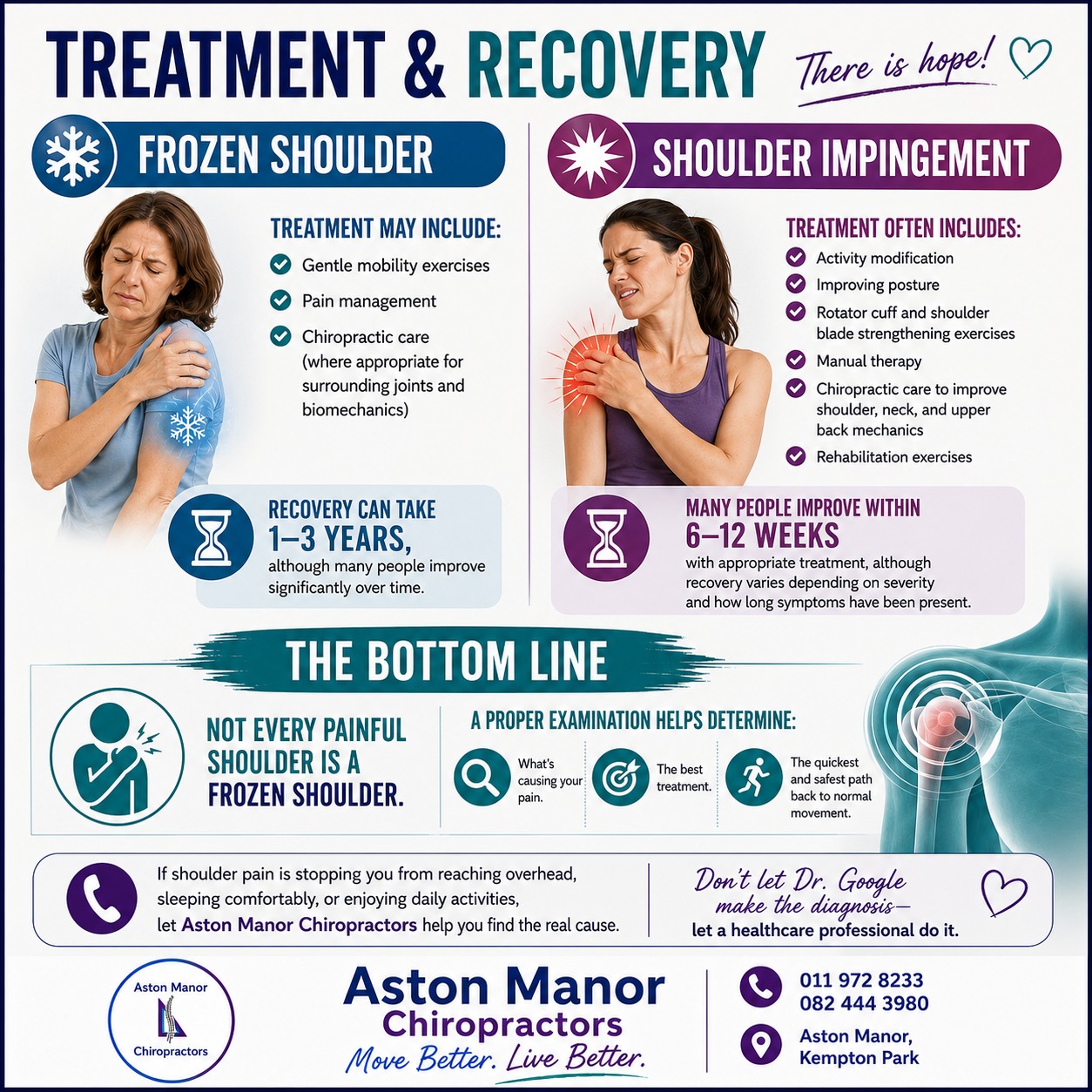
The good news is that both frozen shoulder and shoulder impingement can improve with the right diagnosis and a treatment plan tailored to the underlying cause.
Although the symptoms may appear similar, the management of these conditions differs significantly.
Frozen shoulder treatment focuses on reducing pain, maintaining or gradually restoring shoulder mobility, and supporting recovery as the inflamed joint capsule slowly loosens over time. Recovery can take many months, and in some cases up to two to three years, but most people experience steady improvement.
Shoulder impingement generally responds more quickly and is often managed with activity modification, posture correction, rehabilitation exercises, and treatment aimed at improving shoulder mechanics and reducing irritation of the rotator cuff tendons and bursa. Many people notice significant improvement within 6–12 weeks, depending on the severity of the condition.
Because these conditions require different treatment approaches, an accurate assessment is the first step toward relieving pain, restoring movement, and achieving the best possible outcome.
To Book an Appointment with us
Our office hours are weekdays, 8:00-17:00
Join us on our WhatsApp channel for daily tips and information about how to live a healthier and pain-free life.