Leg Length Inequality | Aston Manor Chiropractors
Could one leg really be shorter than the other?
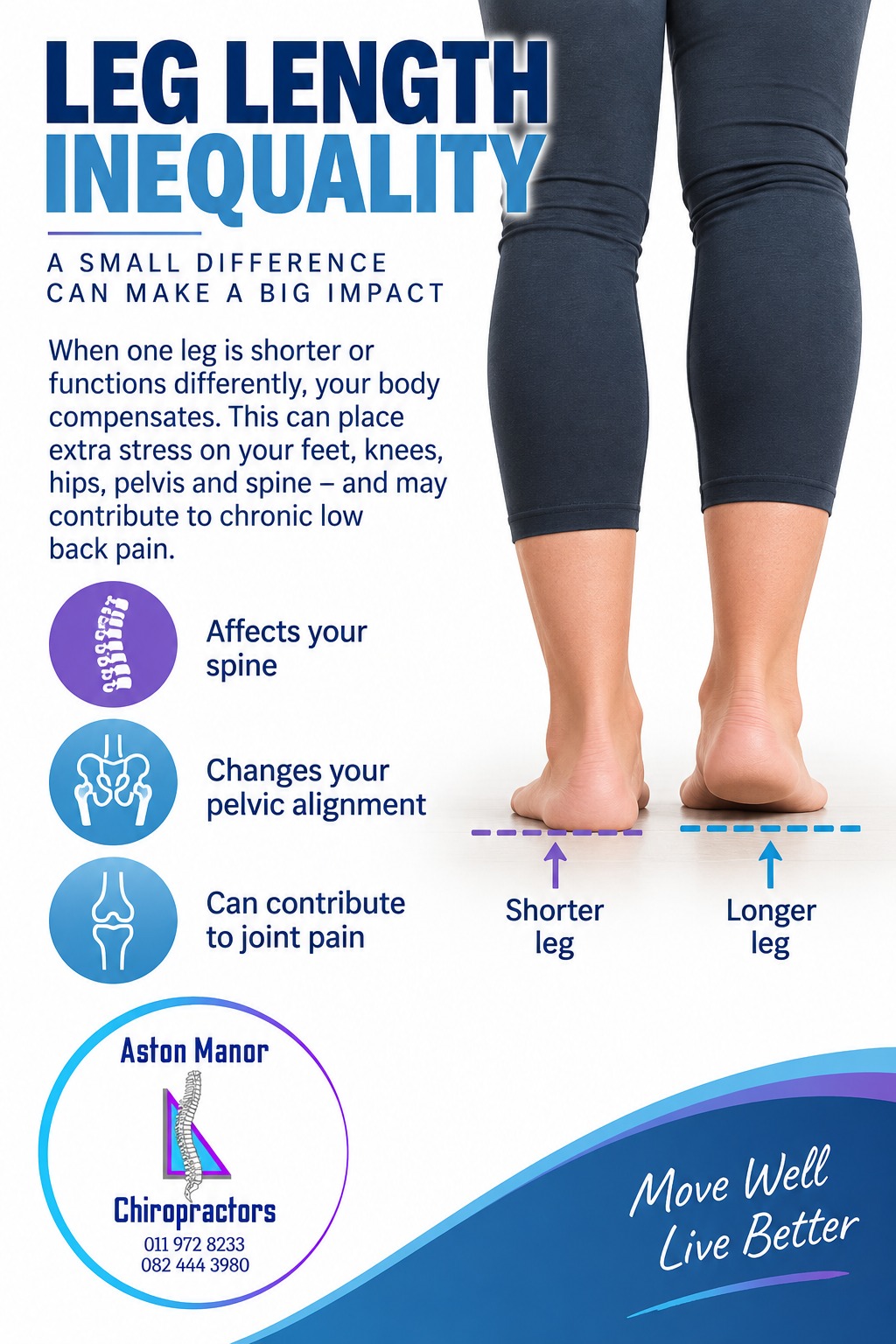
Most people have some degree of difference in the length or function of their legs. In many people, the difference is small enough that the body compensates for it without causing any problems.
However, when the difference is larger, or when the way one leg functions is significantly different from the other, it can change the way you stand and walk. Over time, this may place uneven stress on the feet, ankles, knees, hips, pelvis and lower back.
For some people, leg length inequality may be one of the contributing factors behind persistent or recurring low back pain.
At Aston Manor Chiropractors, we assess the whole chain of movement rather than looking at the painful area in isolation.
What is leg length inequality?
Leg length inequality, sometimes called a leg length discrepancy, simply means that the two legs are not functioning or measuring exactly the same.
There are two important types:
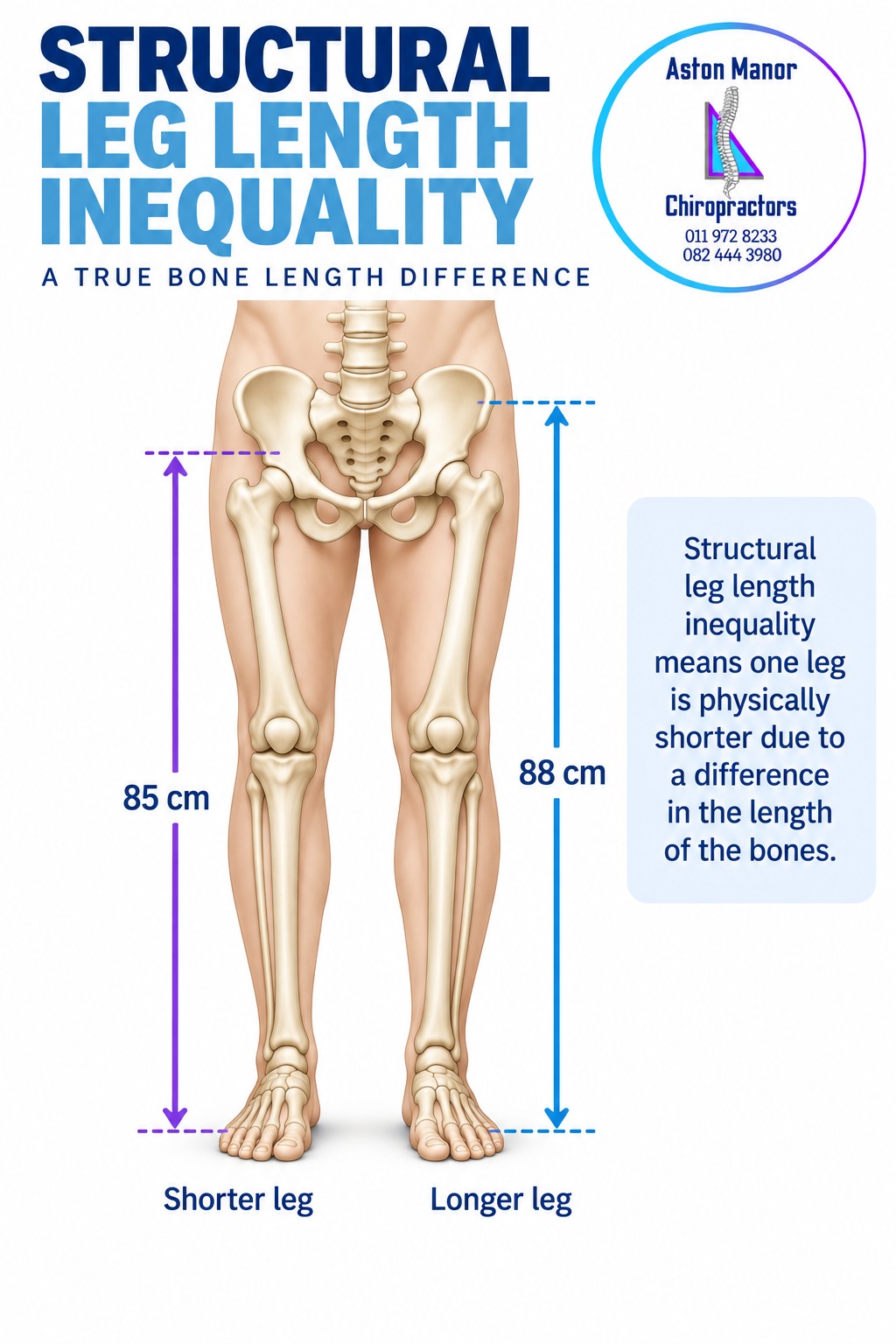
1. Structural leg length inequality
A structural leg length difference means that the bones of one leg are physically shorter than those of the other.
This may involve the femur, tibia or both.
In this situation, the difference is anatomical. The bones themselves are different lengths.
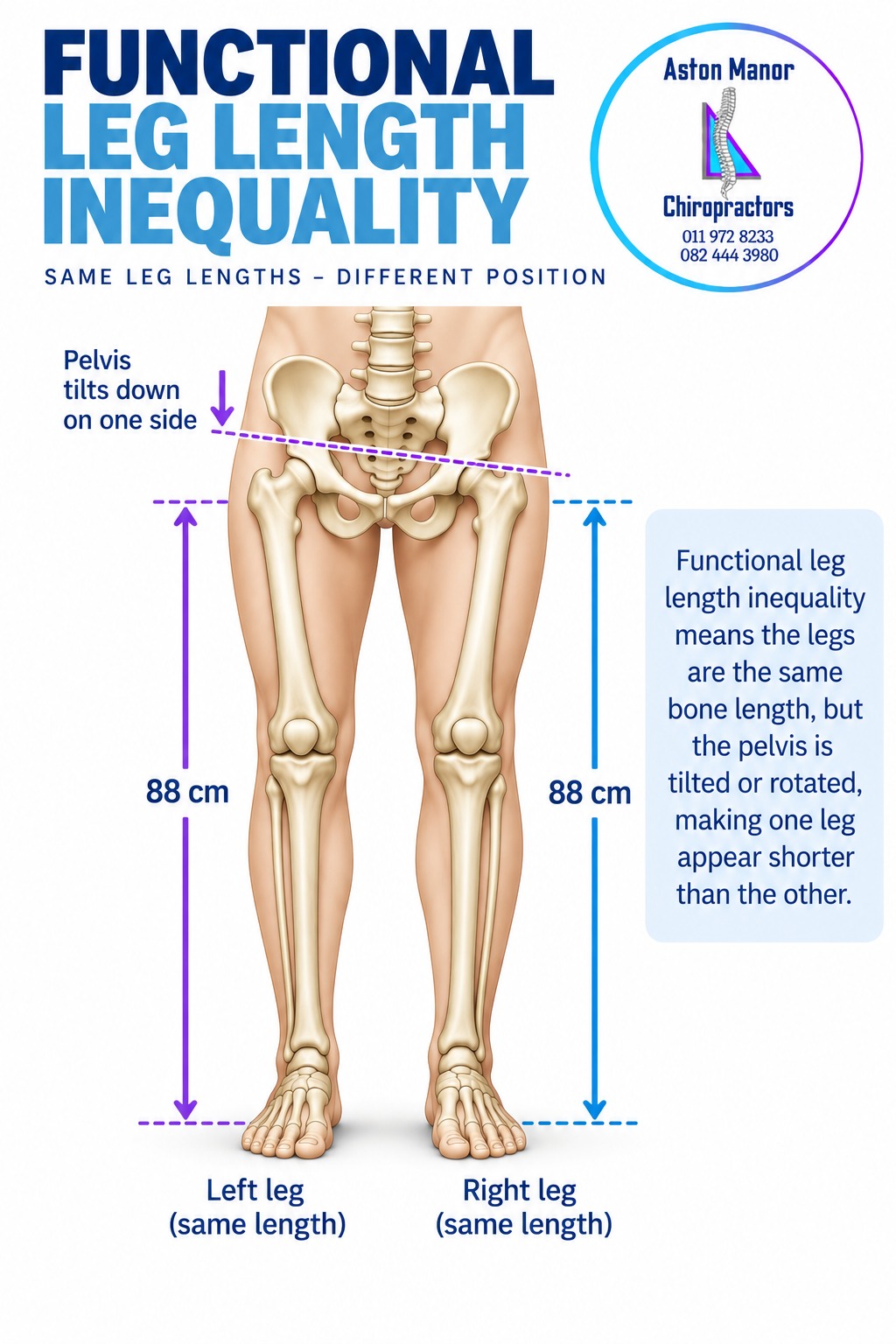
2. Functional leg length inequality
With a functional leg length difference, the bones may actually be the same length, but one leg appears shorter because of the way the body is positioned or moving.
What causes leg length inequality?
There may be a single cause or several factors working together.
Structural causes
Functional causes
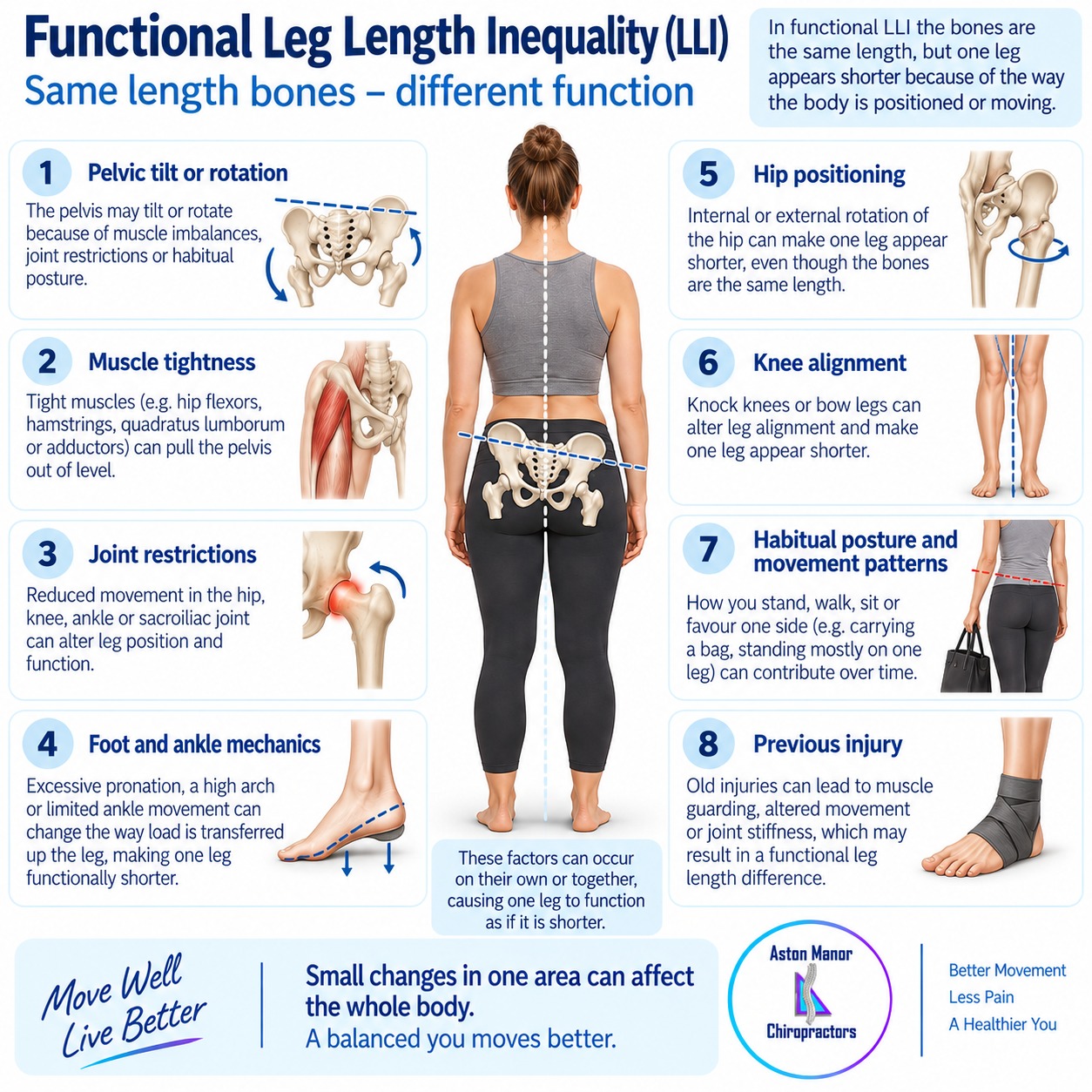
A person can also have both a small structural difference and a functional component.
How can leg length inequality affect your back?
The body has an impressive ability to compensate.
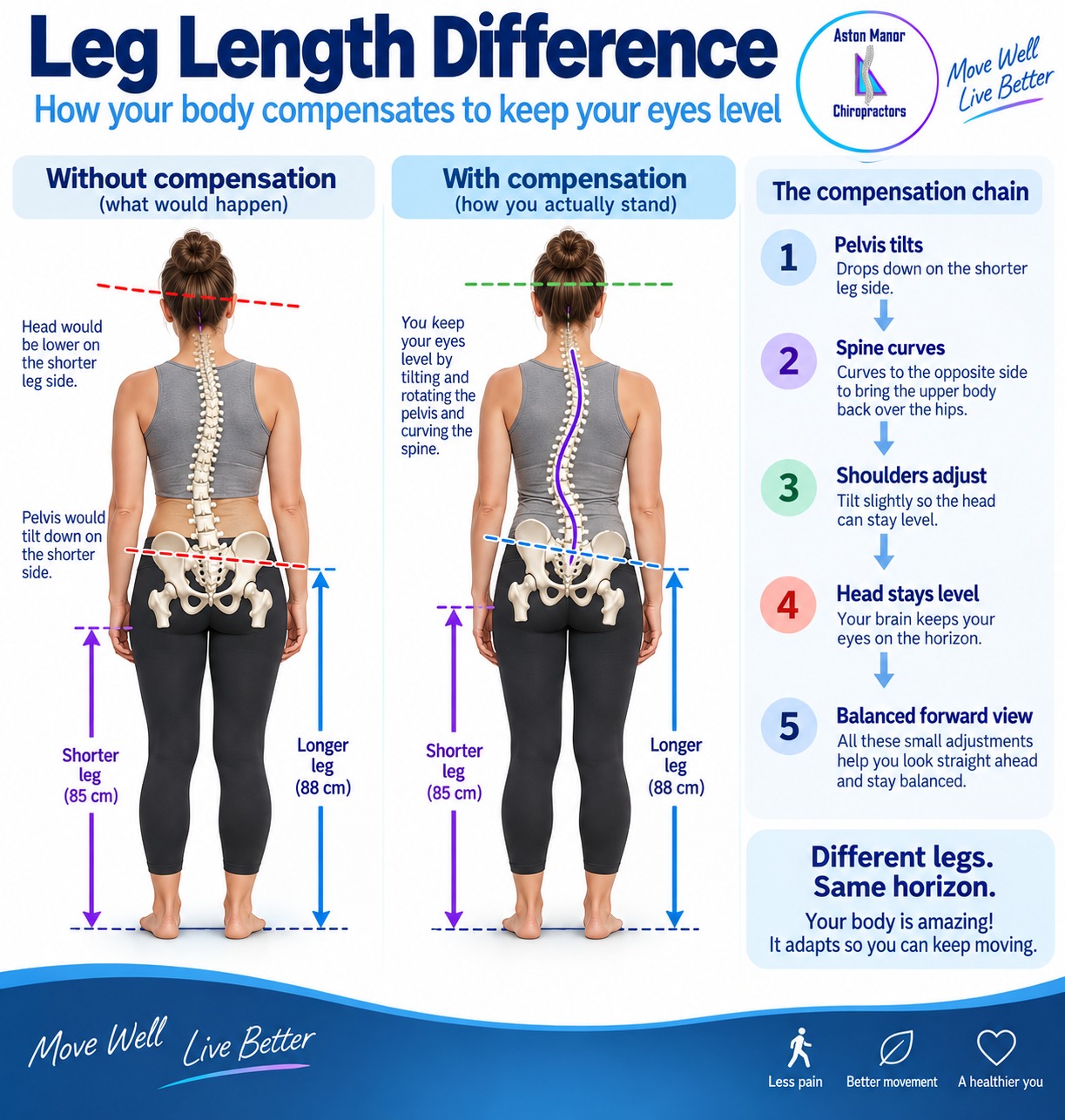
When one leg is shorter or functions differently, the body makes adjustments to keep you balanced and your head relatively upright.
For example, a difference in leg length may cause the pelvis to sit slightly higher on one side. The lower spine may then adapt to this change in order to keep the upper body balanced.
This can alter the way muscles work and change the way forces are distributed through the joints.
It does not mean that a leg length difference is automatically the cause of back pain. Low back pain has many possible causes. However, a meaningful leg length difference can be one of several factors contributing to altered movement and loading.
Can leg length inequality contribute to chronic low back pain?
It can be a contributing factor, particularly when the body is repeatedly compensating for the difference.
However, the relationship is not as simple as: “Short leg = back pain.”
Many people have small leg length differences without any symptoms at all.
The important question is whether the difference is large enough and functionally important enough to affect the way your body moves and carries load.
This is particularly relevant for people with low back pain that:
How would you know if one leg is shorter?
It is not always obvious.
Some people notice a difference themselves, while others only become aware of it after developing recurring symptoms.
Possible signs include:
Some people find that symptoms become more noticeable after prolonged standing or walking.
A tape measure at home may suggest that one leg is shorter, but measurements can be misleading because pelvic position, joint position and soft-tissue tension can change the apparent length of the legs.
When a true structural difference needs to be confirmed, more precise methods such as imaging may be appropriate.
How is leg length inequality managed?
Treatment depends on what is causing the difference and whether it is contributing to your symptoms.
There is no single solution that suits everyone.
Chiropractic care
Where the difference is partly functional, chiropractic care may help improve the way the pelvis, spine and lower limb are moving.
Treatment may include:
The aim is not simply to “put the spine back into place”.
Instead, treatment is directed at improving movement and reducing the need for the body to compensate.
For someone with chronic low back pain, this may mean addressing contributing factors in the feet, hips and pelvis as well as the spine.
Pes Perfect orthotics
Sometimes the problem begins further down the chain — at the feet.
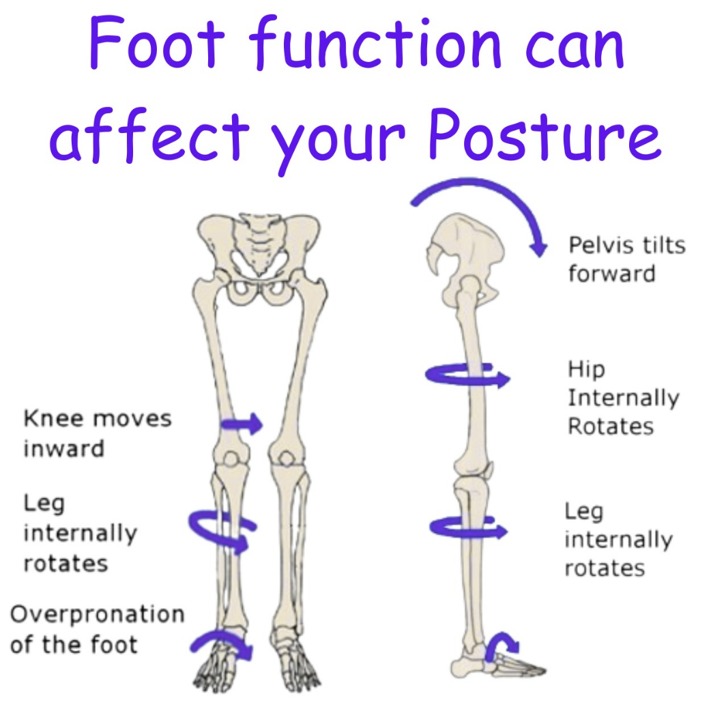
Differences in arch support, foot position or pronation can influence the way forces travel through the ankle, knee, hip and pelvis.
Where appropriate, Pes Perfect custom orthotics can be used as an adjunct to chiropractic care.
Custom orthotics are designed around the individual's feet and may help provide support and improve foot mechanics.
They may be particularly useful when:
Orthotics are not automatically needed for every leg length difference, and they are not a substitute for addressing other contributing factors.
The goal is to correct the factors that are relevant to your movement pattern rather than simply adding support without understanding why it is needed.
When should you have it checked?
It is worth seeking professional advice if you have:
Remember, leg length inequality may be one contributing factor rather than the entire explanation for your symptoms.
What happens at Aston Manor Chiropractors?
We look at the way your feet, legs, pelvis and spine work together and consider your symptoms, movement patterns and previous injuries.
This helps us determine whether a leg length difference may be relevant to your particular problem and whether it is more likely to be structural, functional or a combination of both.
Where appropriate, your treatment plan may include chiropractic care, exercises, movement advice and Pes Perfect orthotics.
If a structural difference requires more detailed investigation, further examination or imaging may be recommended.
The bottom line
Your legs do not need to be exactly the same length for your body to function normally.
A small difference is common and often causes no problems. The concern is when a structural or functional difference changes the way you stand, walk or distribute load through your body.
This may affect the feet, knees, hips, pelvis and spine and, in some people, may contribute to persistent or recurring low back pain.
At Aston Manor Chiropractors, we consider the whole movement chain and, where appropriate, combine chiropractic care with exercise, movement advice and Pes Perfect custom orthotics to help address the factors contributing to your symptoms.
Begin your care
Our office hours are weekdays.8:00-17:00
Join us on our WhatsApp channel for daily tips and information about how to live a healthier and pain-free life.